

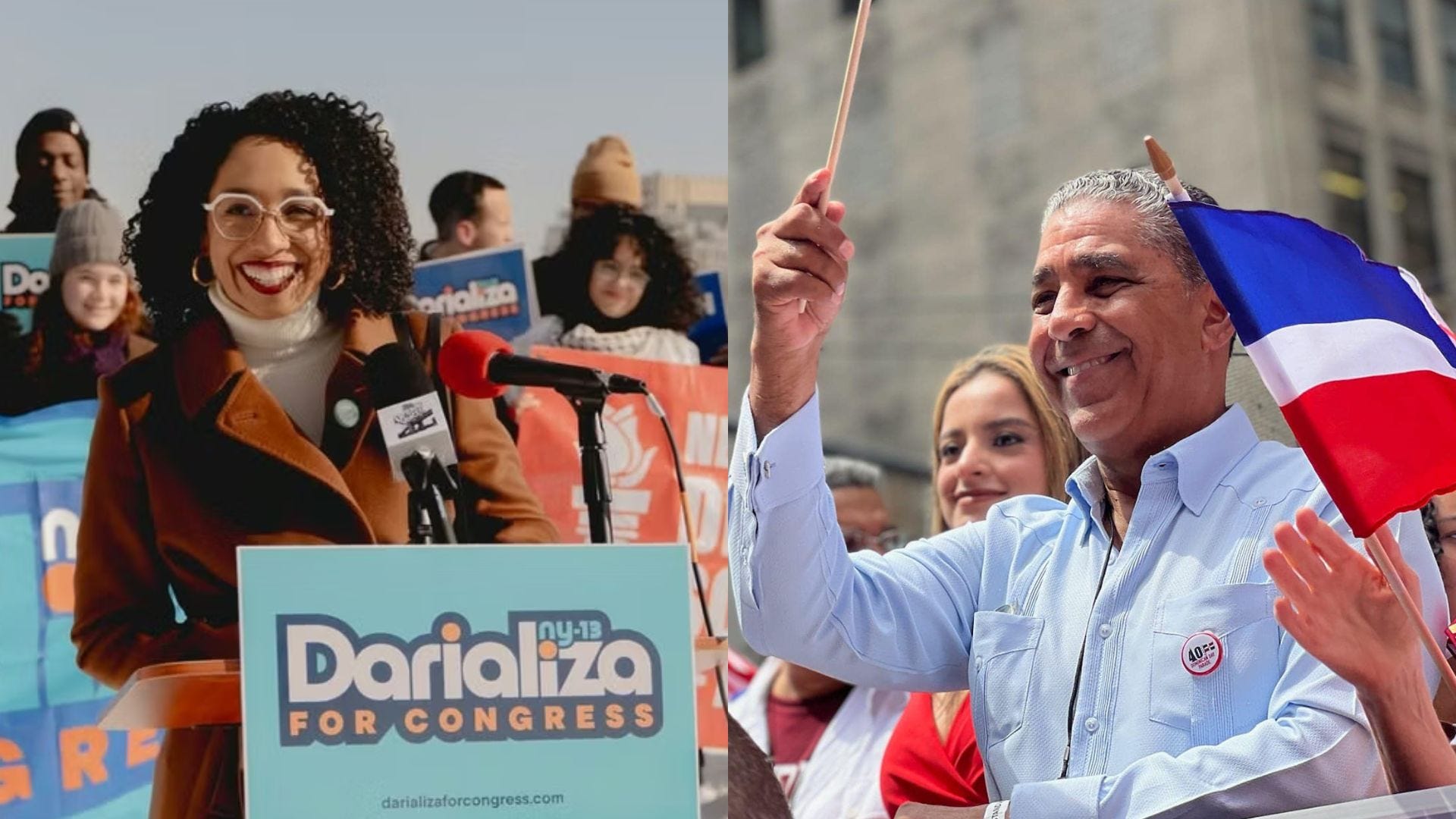
Over the past nine months, The Commie Corridor, defined by the author as “the young and hungry leftist base in North Brooklyn and Western Queens reshaping New York City politics,” has taken on a life of its own. Coined prior to Zohran Mamdani’s upset victory in last June’s Democratic Primary, what was once Signal chat shorthand is now the subject of primetime CNN segments and The New York Times articles.
But how was The Commie Corridor created? And what’s stopping a sequel from developing somewhere else? While partially a story of gentrification and demographic transition (an influx of college-educated voters), The Commie Corridor is equally a tale of institutional atrophy (the decline of traditional political machines), movement rebirth (the rise of organized democratic socialism), and the steady left-leaning realignment of younger, urban Democrats since 2016.
For most of the 21st Century, as local and national politics retained some degree of distance, the Democratic “establishment” in most New York City neighborhoods amounted to no more than a handful of local groups (political clubs, homeowners associations, senior centers) that collectively, at best, could marshall a couple dozen volunteers. The bustling storefronts of yore, embedded in the fabric of their respective communities, were gone. Competitive Democratic Primary elections seldom took place, and when they did, voter engagement was startlingly low, significantly declining over the preceding decades. (Some communities, such as the Upper West Side and Southeast Queens, still retained a genuine connection between their civic institutions and the voting public, but they were the exception to the rule). In hindsight, such an arrangement was a house of cards on the verge of collapse, especially if the electorate could be sufficiently expanded to include more renters and young people, untethered to status quo. The rise of Bernie Sanders and the reign of Donald Trump not only created a political vacuum, but the conditions for greater civic consciousness among Democrats, particularly with respect to local politics. This phenomenon proved fatal for incumbents coasting on conditions that had, almost overnight, been swiftly erased.
In less than a decade, South Asian and Hispanic democratic socialists succeeded Italian and Greek moderates at every level of government in Astoria, colloquially known as The People’s Republic. Once an afterthought, younger voters quickly asserted themselves as the dominant Democratic bloc in dozens of neighborhoods in Western Queens and North Brooklyn, hotbeds of relative affordability with transit access to the urban core. Still, their collective influence was underestimated by the political class, who insisted that the Democratic Party shift to the right following the 2024 Presidential Election. Most importantly, these voters organized themselves and built their own institutions rooted in shared class politics, with volunteer armies that doubled as a source of community, and social media savvy that authentically reached their peers. By June 25th, 2025, you could see The Commie Corridor from space.
And, in late October, I attempted to foreshadow where this “next era of progressive and socialist electoral expansion” (Commie Corridor Jr. per se) would be.
The answer, then and now, is Upper Manhattan.
In both the Democratic Primary and the General Election, Zohran Mamdani validated this hypothesis: in June, he won precincts north of 110th Street by 25 points; in November, his prohibitive margin widened to nearly 40 points. These were, after all, the blocks Mamdani trekked during the first two hours of The Walk: the baseball fields of Inwood Hill Park, where Manny Ramirez learned to play; the rush hour crowds pacing Dyckman Street, the famed nightlife corridor; the sloping hills of St. Nicholas Avenue, the heart of rent-stabilization in Manhattan; the bright lights and picturesque sunsets along Broadway in Hamilton Heights, where Mamdani, on the precipice of history, was cheered heroically; and Morningside Heights, a sophisticated enclave nestled atop a plateau, home to both the Mayor’s parents and Columbia University.
Crucially, all of these aforementioned neighborhoods — as well as Harlem, the gentrifying capital of Black America, and (Spanish) East Harlem, lie in New York’s 13th Congressional District, which spans Upper Manhattan and parts of the West Bronx. Mamdani’s dominance across these neighborhoods is no surprise, for NY-13 possesses the dual ingredients of left-leaning electoral success — renters (99th percentile) and millennials (94th percentile) — both fundamental to the sociological and political identity of each neighborhood. In fact, no Congressional District in the United States has a higher percentage of renters (89%) than NY-13.
One might presume that the “organized left”, omnipresent in other corners of the five boroughs, would have a discernible base of allies here. However, most of the elected officials in Upper Manhattan owe their position to some faction of dynastic, ethnic politics (the Harlem Democratic machine, the “Squadriano” of Dominican-Americans, plus a handful of liberal, Upper West Side expats). In fact, each individual neighborhood resembles its own political fiefdom, dividing the proverbial “establishment.” This diffusion, combined with a working-class and increasingly young electorate, engenders vulnerability — and opportunity. Last year, many of these politicians sided with Cuomo, or were coerced into neutrality by the specter of retaliation. And yet, Mamdani crushed the former Governor, a sign of disconnect between rank-and-file voters and the politicians who represent them. Now, the most prominent among them, Congressman Adriano Espaillat, is facing a spirited, underdog challenge from organizer Darializa Avila Chevalier. The race between Espaillat, the first Dominican-American elected to the House of Representatives, and Avila Chevalier, endorsed by both NYC-DSA and Justice Democrats, has pushed many of the latent fault lines in the Democratic coalition to the forefront.
Here, the ingredients of progressive success will collide with the institutions that have upheld the political establishment. Espaillat, a multi-decade fixture of Upper Manhattan politics, uniquely embodies the style of power — inherently local, nakedly transactional, ethnic-oriented, machine-rooted — that now finds itself under siege in an era of sweeping, mass politics. Such a fraught and nuanced contest, decided by one of the most working-class and racially-diverse electorates in the nation, will prove insightful with respect to the Democratic Party’s future. Yet, despite a degree of vulnerability and favorable fundamentals, defeating Espaillat will prove difficult.
For the power broker’s career is defined by an innate ability to outlast his enemies.
Adriano Espaillat, 71, lacks the national profile afforded to many of his New York colleagues, despite chairing the Congressional Hispanic Caucus. As the first Dominican-American and formerly undocumented immigrant to serve in Congress, Espaillat has long been considered a political trailblazer, particularly in the predominantly Dominican communities of Washington Heights and Inwood. For decades, Espaillat has outhustled and strong-armed political rivals across Upper Manhattan, slowly climbing the ladder of public and elected office.
A native of Santiago, the second largest city in the Dominican Republic, Espaillat has politics in his blood, literally. He is the second great-grandson of military hero Pedro Ignacio Espaillat; the great-grandson of former Dominican Senate President Mario Fermín Cabral y Báez; which also makes him a descendant of 19th-century Dominican President Buenaventura Báez. Moving to the United States in 1964, the Espaillats overstayed their tourist visa before eventually becoming green card holders. They raised their son in Washington Heights, part of a wave of Dominican immigrants escaping war and economic strife who settled in Upper Manhattan, aided by the Hart–Celler Act which abolished past Eurocentric immigration quotas. An aspiring politico, Espaillat embedded himself in local institutions: serving on the community board, leading the police precinct council, advising the Governor on Dominican issues, plus a gamut of nonprofit work: legal services, conflict resolution, victim’s services.
His first opportunity came in 1991, amidst a crowded and competitive field for a City Council seat in Washington Heights and Inwood. Espaillat hustled hard, but lost by five points to Guillermo Linares, who became the first Dominican-American elected to office in New York City (let alone one of the first in the nation); an honor the descendant of Caribbean political royalty almost certainly believed should have been his. This would be the beginning of a long and bitter rivalry between Espaillat and Linares for the mantle of leading Dominican power broker in the five boroughs. The former’s breakthrough would come in 1996, as Espaillat challenged sixteen term incumbent John Brian Murtaugh. Murtaugh, the last remaining Celtic pol in the area, had represented Inwood and Washington Heights since they were predominantly Irish and Jewish. However, by the end of the 20th century, Murtaugh’s district had become 80% Hispanic, and majority Dominican. When his insurgent bid ran out of money, Espaillat, sensing this was his last and best chance to ascend, sold his car so he could keep campaigning. His investment proved wise and life-changing, as Espaillat ultimately dethroned Murtaugh by 401 votes; completing an ethnic succession in Upper Manhattan on his way to the State Assembly. He would remain in Albany’s lower chamber for fourteen years, championing issues foreign to many New Yorkers, but near and dear to his community: driver’s licenses for undocumented immigrants, greater protections for livery cab drivers, health care for low-income daycare workers. Espaillat’s 2010 campaign for State Senate pitted him against Mark Levine, a liberal and Jewish political upstart fluent in Spanish. The campaign was fraught, Levine decried Espaillat as the consummate Albany Insider, even calling on the State Attorney General (then-Andrew Cuomo) to investigate his rival for corruption. The Northern Manhattan Coalition for Economic Development, a nonprofit “largely funded by state grants secured by Espaillat” was “mostly staffed by members of his campaign and inner circle,” according to The New York Post. High-turnout Jewish voters, particularly in the Riverdale section of the Bronx, were a key slice of the electorate. To the surprise of many observers, Espaillat won Riverdale (and the election as a whole), proof that a gentile could defeat a Jew among Abraham’s descendants. Notably, their differences were purely identitarian, rather than substantive; Levine and Espaillat were, and continue to be, strong supporters of the Israeli state. While Espaillat, eager to crush his rivals, traditionally kept former opponents at arm’s length, he embraced Levine as one of his own, gaining a longstanding ally.
Espaillat had barely settled into Albany’s upper chamber before he began plotting his next move: the House of Representatives. New York’s 13th Congressional District, which encompassed all of Upper Manhattan, had been represented by Charlie Rangel for four decades. But Rangel, who had succeeded the increasingly ill and unscrupulous Adam Clayton Powell Jr. in 1972, began showing similar signs of fatigue and decline. Now in his 80’s, nursing a back injury and a viral infection, Rangel was absent from Washington. After decades of accruing seniority, Rangel no longer held the gavel on the lucrative Ways and Means, having been censured for corruption in 2010. “This is The Harlem Seat,” the Black establishment protested.
But was it still? By 2012, there were twice as many Hispanic residents than Black residents in NY-13. And that gap would only widen in the years to come.
The old and scandal-scarred Rangel had more fight left than Espaillat anticipated. Furthermore, the Dominican power broker, used to the horse-trading of Albany and presiding over his local fiefdom, proved ill-equipped at building broad support beyond his immediate base of Washington Heights and Inwood. In 2005, Espaillat had briefly tried his hand at city politics, running for Manhattan Borough President against eight other candidates. While Espaillat won the 72nd Assembly District, the densest Dominican blocks in Manhattan, he struggled to make inroads elsewhere, earning a meager nine percent of the vote. Now, that similar lack of coalitional appeal threatened to derail his ambitions once again. When the ballots were tallied, Espaillat had lost by only one thousand votes, with a racially polarized result between Black Harlem and Hispanic Washington Heights and Inwood. In the West Bronx (recently drawn into the district) and East Harlem (historically Puerto Rican, with a growing Mexican population), Espaillat left meat on the bone with Hispanic voters. Two years later, he challenged Rangel, then aged eighty-four, again, only to fall short once more by a comparably close margin. Things would soon get dicey, as Espaillat fell victim to New York’s bizarre elections calendar (federal primaries in June, State primaries in September). After every losing Congressional primary, he would have to turn around and defend his State Senate seat a few months later. Those races, too, were bitter and divisive: with Espaillat forced to fend off his old foe, Guillermo Linares (62% to 38%); and then dispatch City Councilmember Robert Jackson (49% to 43%). Each time, his margin of victory decreased. There was not only Adriano Espaillat fatigue, but the Dominican power broker had made some powerful enemies.
Everything built up to the 2016 Democratic Primary, as Espaillat faced promotion or his third consecutive rejection. Rangel had finally retired, and Espaillat was no longer facing an institution. Nevertheless, the Lion of Lenox Avenue endorsed Harlem’s own Keith LT Wright, Espaillat’s former colleague in the state legislature, as his chosen successor. While the race would narrow to Espaillat versus Wright, the field of other candidates arguably determined the outcome: Guillermo Linares, facing Espaillat for the third and final time; Adam Clayton Powell IV, the grandson of the former representative; Clyde Williams, a former Democratic National Committee official endorsed by The New York Times; and Suzan Johnson Cook, the former U.S. Ambassador for International Religious Freedom in the Obama administration. In a battle of turnout between Black and Hispanic voters (with a non-insignificant number of middle-class, professional White voters), the Black candidates (Wright, Williams, Powell IV, Cook) outpaced the Dominican candidates (Espaillat, Linares) 56% to 42%. And yet, Espaillat narrowly prevailed head-to-head against Wright (36.7% to 33.9%). His old foe, Linares, earned a meager five percent, not even enough to be a spoiler.
Of his three consecutive runs for Congress, Espaillat won both his lowest vote share and lowest vote total, in 2016. Not only had he failed to grow his coalition, he watched it diminish. Still, the war of attrition had been won. For the first time in seventy years, Harlem would not have an African American representative in Washington.
Adriano Espaillat’s ascendance is a testament to an era of New York City politics, one of relationships and transactions, that has diminished with time. Yet, the old school power broker remains standing: holding court with mayoral aspirants over coffee in Inwood, directing votes in the invisible race for City Council Speaker, building a bench of loyal (oftentimes Dominican) allies, coined the “Squadriano.” Espaillat lives for the sweltering heat of summer, white shirtsleeves rolled up, charming seniors in Spanish while stumping for votes along Dyckman Street, flanked by his entourage. For real power lies not in the cloakroom, but how many people back home know your name.
Perhaps no politician in the five boroughs is so well acquainted with bitter, closely-contested campaigns; across thirty years, Espaillat has competed in ten primaries decided by less than six points. He knows how to win. Or at least he did.
Darializa Avila Chevalier, 32, endorsed by both the New York City chapter of the Democratic Socialists of America and Justice Democrats, erstwhile engines of Alexandria Ocasio-Cortez and Jamaal Bowman’s upset victories against Congressional incumbents, is hoping for a similar wave of momentum to help her dethrone Adriano Espaillat. But are those campaigns, multiple cycles removed from the present, applicable comparisons? And is Espaillat, the legendary Dominican power broker, as vulnerable to a left-leaning challenge as Joe Crowley and Eliot Engel?
Yes and No. Crowley, an Irishman who never learned to speak Spanish, proved no more than a stranger to his working-class, Hispanic constituents and an insufficient relic of the establishment to college-educated progressives. Engel, a sixteen term incumbent, uttered a damning off-color remark (“if I didn’t have a primary I wouldn’t care”) after the murder of George Floyd, a fatal mistake in a majority-minority district during the protest summer of 2020. By the time of their demise, both Crowley and Engel had largely absconded to suburban Virginia, leaving a political vacuum at home within their respective districts. Neither spent heavily, either through their campaign or allied independent expenditures, against their surging insurgent opponents. Each campaign was defined by unforced errors (Crowley infamously skipped a debate with Ocasio-Cortez, sending a surrogate instead, earning him a rebuke from The New York Times that lent credence to Ocasio-Cortez’s charges of absenteeism).
Has Adriano Espaillat lost a step? Without a doubt.
In my part of the district, Morningside Heights and Manhattan Valley, a vote-rich corridor of No Kings marchers and college students which broke heavily for Mamdani, the Congressman is nowhere to be found, already skipped two candidate forums organized by local clubs (Crowley-esque). In Harlem, long the base of power for Espaillat’s African American rivals, the incumbent will assuredly pick up token endorsements from local elected officials, a gesture of goodwill towards their representative, but few will actually go to bat for him. Working-class East Harlem, an eclectic mix of Puerto Ricans, professionals, and public housing residents, was Espaillat’s worst neighborhood in 2020. And even within his alleged stronghold of Washington Heights and Inwood, upper-middle class white voters (west of Broadway) in park-lined cooperatives have never been enamored with Espaillat, much preferring his progressive rival, Robert Jackson. Sure, Espaillat will likely hold his own in the West Bronx, which includes lower-income Dominican neighborhoods that, while on the other side of the Harlem River, are culturally akin to his core constituencies. But, the Bronx portion of NY-13 totals only 15% of the predicted electorate. Altogether, this is a wholly unimpressive position for a five-term incumbent. And yet, absent a fatal error by Espaillat, it may not be enough for Democrats to expel him from office.
NYC-DSA, despite Mamdani’s incredible triumph, has never won a race in Upper Manhattan. Justice Democrats, once a vaunted stalwart of the national left, fell on hard times during the Biden years. (Avila Chevalier was recruited by Justice Democrats, then endorsed by NYC-DSA). Steadfast allies of the progressive left — The Working Families Party, The United Auto Workers, Jews for Racial and Economic Justice — all of whom have discernible pockets of support in NY-13, have refrained from endorsing Avila Chevalier. Nor is Zohran Mamdani, the most powerful voice on the left, likely to get involved in the race to unseat Espaillat, a featured Speaker at Mamdani’s October 14th rally in Washington Heights. Espaillat’s influence over a handful of lawmakers in Albany and the City Council acts as a bulwark against an intervention from the young Mayor, who has moved with caution his first three months.
Thus, Avila Chevalier will need a wedge issue that makes Espaillat appear out of touch and makes her insurgency attractive to liberal Boomers in Morningside Heights, middle-aged Black voters in Harlem, and Hispanic renters in East Harlem and Washington Heights. For many left-leaning candidates, from the suburbs of New Jersey (Analilia Mejia) to metro Chicago (Daniel Biss, Kat Abughazaleh), that wedge issue has been the abolition of ICE, particularly after the murders of Alex Pretti and Renee Nicole Good. Espaillat, a former undocumented immigrant, boasts a respectable record with respect to immigration, forged across several decades.
However, there is one notable blemish on Espaillat’s record, that simultaneously points to the race’s subtle but key fault line: the abduction of Mahmoud Khalil by ICE. Last March, Khalil, a graduate student at Columbia University and pro-Palestinian student activist known for his role in the 2024 Gaza Solidarity Encampment protests, was arrested by ICE agents inside the lobby of his apartment building, before being taken to a detention facility in Louisiana, where he was held for three months (missing the birth of his child), until a federal judge ordered his release. Crucially, Khalil was a constituent of New York’s 13th Congressional District.
Traditionally, members of Congress and their staff would work tirelessly to secure the release of a detained constituent, particularly given the explicitly political nature of Khalil’s abduction. Still, Espaillat could only muster a tepid statement: “I expect the Department of Justice to work within the confines of the law and that due process is guaranteed to him and his family. The rule of law must be respected.”
In fact, the office of Rep. Alexandria Ocasio-Cortez soon took over Khalil’s case, despite the Columbia student not being her constituent. Why? Perhaps because Espaillat’s top donor, the American Israel Public Affairs Committee (AIPAC), vehemently objected to Khalil’s rhetoric with respect to the War in Gaza. Avila Chevalier, who cut her teeth as a student organizer at Columbia University alongside Khalil, certainly feels strongly about Espaillat’s mistreatment of her friend and ally.
Nonetheless, will a referendum on AIPAC, increasingly persona non grata among the Democratic mainstream, resonate broadly with one of the nation’s most working-class constituencies? Mamdani proved that moral politics were also winning politics, particularly with younger and disillusioned voters Uptown. Still, the nexus of his Upper Manhattan inroads came from a relentless focus on costs-of-living, which helped the lesser-known democratic socialist earn the trust of middle-aged Black and Hispanic voters, whose orientation to politics is less ideological, and more relational.
The conditions of the 2026 midterm elections, along with the broader social forces of the country — daily chaos emanating from the Trump administration, a vacuum within the Democratic Party, and the salience of progressive messaging (affordability, anti-oligarchy) — are reminiscent of both 2018 and 2020, when the socialist left in New York City enjoyed scores of success. Now, in a post-Zohran world, the conditions today are arguably even more favorable, with anti-incumbent sentiment and voter engagement climbing by the day. Still, attention, in a city filled with candidates pleading for more money and more time, is both thin and finite. There is a reason incumbents win re-election 97% of the time, after all. For Avila Chevalier to prevail, she will have to overcome such inertia in a matter of months.
Mamdani, with his effortless aura, conditioned us to believe that such great feats were not only possible, but probable. Time and again, the struggles of political insurgency have been airbrushed away by the fleeting highs of success. The clasped hands covering up one’s exclamation and astonishment, as a life-changing reality sets in. A songbird perfectly landing on a speaking podium. The triumphant “my friends, we have done it,” addressed to a packed house of supporters on a sticky summer night.
These successes, mere moments, live on for years to come: sustaining the souls of those who have sacrificed; bestowing meaning onto those previously feeling adrift; serving as a reservoir of hope in challenging times; and most importantly, inspiring the next generation to step forward. Whether or not Darializa Avila Chevalier carries the day on June 23rd, there will soon be a new day dawning in Upper Manhattan.
Even The Commie Corridor was not built in a day.
Connect With Me:
Follow me on Twitter @MichaelLangeNYC
Email me at Michael.James.Lange@gmail.com
This is what a civil war inside a party looks like before the shooting starts—slow erosion, then sudden collapse. The old Manhattan machine built its power on favors, backroom deals, and low turnout. That world is gone. Now they’re facing organized, motivated voters who don’t need permission and don’t play by the old rules. They still control the Speaker’s chair, still lean on the judiciary—but those are rear-guard positions, not future power. Once the base flips, everything flips. And when it does, the same insiders who once dictated outcomes will be reduced to spectators. The question isn’t if. It’s how fast the collapse comes.
As usual, tuned to the pulse of elections.
Political clubs and block associations are gone, The Jefferson Club in Canarsie had a captain on every block, weekly club meetings well attended and “retail politics” prevailed.
Now living in CD 12, a cavalry charge, with Micah Lasher’s 5 M in Bloomberg “independent expenditure” cash I receive a flyer a day, mostly trashing opponents, will it help or piss off potential voters? My political club is a trompe d’oil, a facade …
Will the NYT endorse? Probably the most influential voice.
Politics has strange bedfellows and visa versa
I believe Randi Weingarten lives in the district, I’ll have to ask for her views.