

It was called “a cartographer’s worst nightmare.”
Rep. Stephen Solarz, one of the most powerful Democrats in the House of Representatives, watched as his district was (metaphorically) blasted apart, the consequence of a bloody redistricting knife fight.
It was 1992, and Solarz, who had painstakingly climbed the ladder of Brooklyn politics, was one of the most powerful Democrats in the House of Representatives, even on the shortlist to be the next Secretary of State. Once a leading critic of the Vietnam War, the highest-ranking Jewish member of the Foreign Affairs Committee had become a leading proponent of the Gulf War. In service of his national ambition, he had traded his modest residence in Kings County for a “sprawling” estate in suburban Virginia, only keeping a paper address in Brooklyn (his mother-in-law’s condo in Manhattan Beach). For years, he had thoroughly overshadowed another colleague from Brooklyn, Chuck Schumer, such that the latter contemplated departing federal politics altogether. But now, with his illustrious career in jeopardy, Stephen Solarz was left with three options: (A) challenge his colleague Ted Weiss, a well-respected liberal from Manhattan’s West Side whose district now snaked into Brooklyn, absorbing old pieces of Jewish neighborhoods once represented by Solarz; (B) run against Bill Green, the liberal Republican congressman from Manhattan’s East Side (the “Silk Stocking” district that had once been represented by John Lindsay and Ed Koch), which also included the Poles of Greenpoint and Greeks of Astoria; or (C) run in the newly-created 12th Congressional District, drawn by mapmakers to maximize the influence of Hispanic voters: from Puerto Ricans in Sunset Park, Bushwick, and “Losaida” to Latin Americans in Jackson Heights and Corona.
The besieged incumbent settled on the final choice: a heavily-gerrymandered, tri-borough district created to empower New York City’s growing Latino population. Flush with more than two million dollars (an incredible sum for the time), Solarz would attempt to steamroll his way to a slim plurality by any means necessary, while his (less funded) half-dozen Latino opponents split the remainder of the vote. Assailed for attempting to salvage his career at the expense of increased Latino political power and representation, Solarz was undeterred.
And if not for Nydia Velázquez, Stephen Solarz may have succeeded.
Velázquez, the daughter of a sugarcane worker from Yabucoa, a rural town on the outskirts of Puerto Rico, was always destined for greatness. As one of eight siblings, she more than held her own in dinnertime conversations, which were inevitably rooted in political organizing (farm workers, labor unions, Puerto Rican self-determination). She skipped three grades, becoming the first person in her family to receive a high school diploma, before arriving in New York City for college. In no time, she was teaching the classes herself, while simultaneously becoming enmeshed in local politics. In 1984, she was selected to fill a vacancy on the City Council, becoming the first Hispanic woman to serve on the body. However, the Brooklyn Democratic machine had other ideas, and ousted Velázquez in the next election. Undeterred, she pioneered Atrévete Con Tu Voto, a program that aimed to empower Latinos across the United States through voter registration. In New York City alone, Atrévete registered more than 200,000 new Latino voters, most of whom were Puerto Rican. Here, Velázquez “solidified her reputation as a street-smart and politically savvy woman who understood the value of solidarity and loyalty to other politicians, community leaders and unions.” Alongside Mayor David Dinkins, labor leader Dennis Rivera of 1199 SEIU, presidential candidate Jesse Jackson and others, Velázquez was integral in building New York City’s Rainbow Coalition, a political movement rooted in organized labor, progressive politics, and the multi-racial working class.
The Rainbow Coalition swept the first Black man into City Hall, but could it send the first Puerto Rican woman to Congress?
Stephen Solarz and Velázquez’s other opponents did not roll out the red carpet for her. A rival Hispanic candidate, Elizabeth Colon, mocked Velázquez’s accented pronunciations in English. Several prominent Puerto Rican politicians backed other candidates, and there was certainly no consolidation to stop the well-funded Solarz, who inundated local radio with Spanish language advertisements. (After the primary, Velázquez’s medical records were leaked, which revealed a prior suicide attempt). Her critics wondered aloud whether her ties to Puerto Rico made her too parochial to serve the Hispanic community in New York and if her alliance with Mayor Dinkins compromised her independence. Nonetheless, Velázquez was revered by supporters as a relentless fighter for “a progressive agenda.” She was beloved in the Puerto Rican communities of Williamsburg and Bushwick, then low-income neighborhoods riddled with crime and drugs, whose residents were desperate to see one of their own conquer the political establishment. Solarz would send “eight mailings and they were all on Israel, [but] never anything about Flatbush or Ocean Parkway,” whereas Velázquez was relentlessly focused on the needs of the district’s working class, Spanish speaking residents. After Solarz stumbled through a Spanish introduction at a forum, the slim Velázquez arose from her chair and delivered a fiery rapid-fire rebuke, “he doesn’t speak our language, the language of the poor.” When a wall separated Puerto Rican and Hasidic children at a school in Williamsburg, Velázquez protested vociferously. Soon, the wall came down.
When the votes were counted, Velázquez prevailed in the seven candidate field — 34% to Solarz’s 28%. Solarz’s choice was ultimately the wrong one: Weiss passed away the day before the election (he won anyway), and his seat was eventually filled by then-Assemblymember Jerry Nadler; whereas Bill Green was defeated in November by a young mother on the City Council named Carolyn Maloney. Stephen Solarz would never hold elected office again.
Nydia Velázquez would go on to serve 34 years in Congress.
Since 1992, New York’s 7th Congressional District has changed remarkably.
Once gerrymandered block-by-block without shame, the contours of district are more compact than ever, excesses reigned in by a special master in 2022. Once a “Hispanic-opportunity” seat protected by the Voting Rights Amendment, NY-7 is now plurality white. The epicenter of Puerto Rican political power, the 7th District is now the heart and soul of the Commie Corridor, reshaped by Millennial and Gen Z renters, creating the most left-leaning electorate of any Congressional seat in the nation.
On the neighborhood level, the changes are even more pronounced. Long Island City is no longer a forgotten outpost for industry, but a haven of tech workers and recently erected luxury buildings. The Poles have left Greenpoint, and the Italians have deserted Woodhaven; both have been replaced by white college graduates from out of state and multi-racial immigrants, dueling middle-class tenants of the nuanced and diverse Mamdani Coalition. No more is Sunnyside an exclusively Irish enclave, lined with pubs and watering holes bearing shamrocks, but a Queens County melting pot of professionals, young families, and recent immigrants, bearing food from Paraguay and Thailand. The hip frontier of the L train has shifted one stop east every couple of years, from Williamsburg to Los Sures to Bushwick — an insignificant and forgotten voting bloc prior to Bernie Sanders and Donald Trump; this loose collection of young renters now comprises a majority of the 7th Congressional District. They are joined, politically, by their more well-heeled neighbors in Fort Greene and Clinton Hill, once the stomping ground of Spike Lee and Christopher Wallace and now the home of Brownstone Brooklyn’s professional class.
However, even amidst the breakneck pace of the five boroughs, not all has been lost in North Brooklyn and Western Queens. The Satmar Hasidim of South Williamsburg, the descendents of Holocaust refugees whose anti-Zionist politics do not neatly conform to stereotypes, have remained a supermajority in their triangled enclave since the second World War. Glendale, sequestered from subway lines, has been a refuge for the city’s dwindling population of middle-class, white ethnic homeowners — Archie Bunker’s descendents — who anchored the electorate in the World’s Borough in the days of Tom Manton and Joe Crowley. And, despite the violence, alcoholism, and drug use that once condemned quality of life across both Bushwick and the Southside of Williamsburg, many Puerto Rican and Latino families persevered and achieved the dream of stability, now often manifested in the ownership of a modest single or two-family home east of Myrtle Avenue, or on the other side of Highland Park, in working-class Cypress Hills.
New York’s 7th Congressional District is in the 99th percentile nationwide with respect to its share of both Millennials (31%) and renters (78%) — the two most consequential ingredients for leftist politics. Only NY-10 (Brownstone Brooklyn, Lower Manhattan), NY-12 (Midtown Manhattan, Upper West/East Sides), and CA-30 (Los Angeles, West Hollywood, Pasadena) have a higher percentage of residents in media and arts. In the Democratic Primary for Mayor of New York City, the past and present of the 7th District faced off head-to-head; with the new, embodied by democratic socialist Zohran Mamdani, trouncing the old, symbolized by former Governor Andrew Cuomo — 76% to 24%. In fact, no Congressional District was more friendly to Mamdani than NY-7, evidence of the community’s increasingly ideological bent.
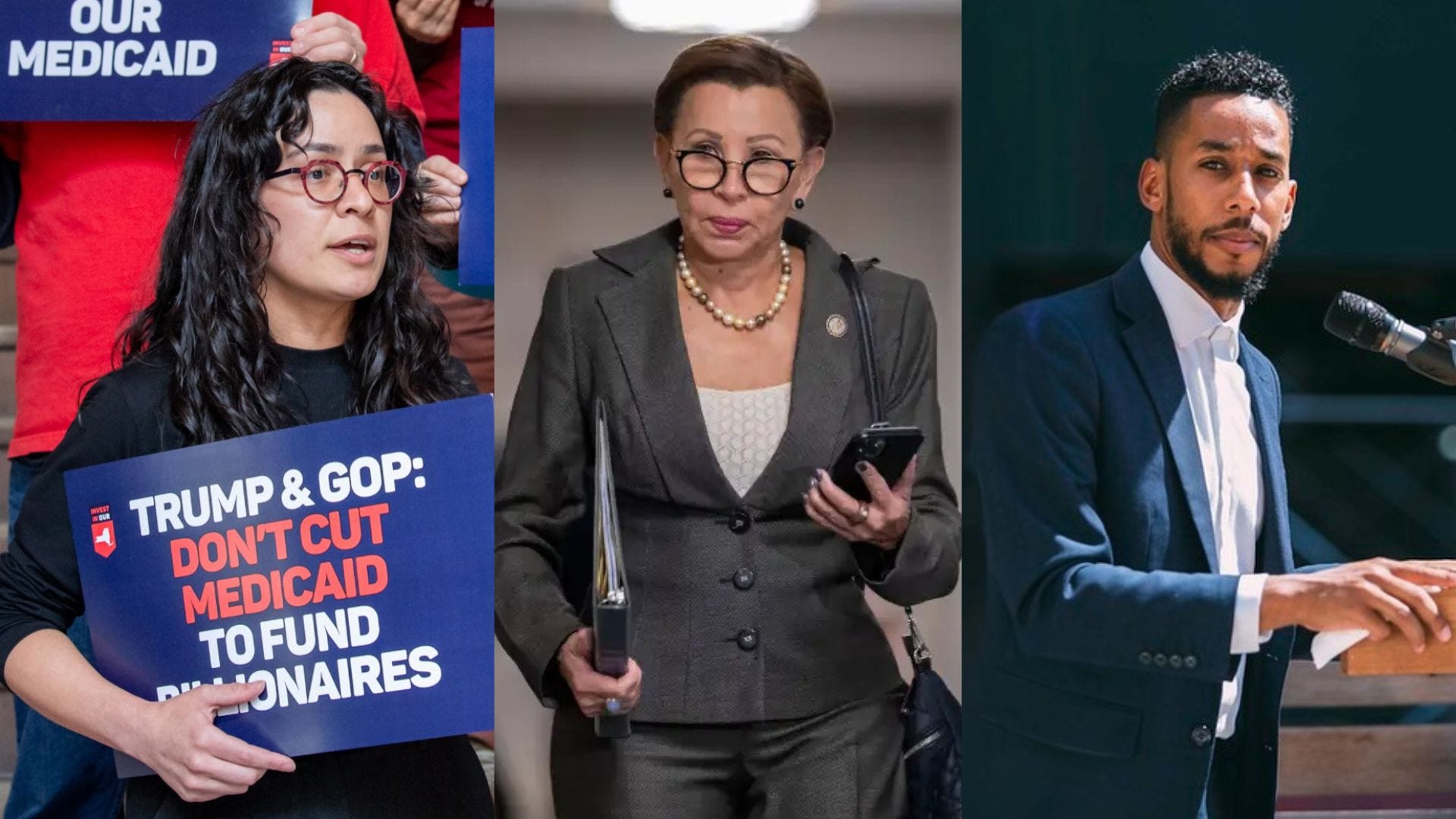
These changes, a snapshot of a thirty year migration of urban political power, are perhaps best embodied by the candidates — some declared, others rumored — who hope to succeed Nydia Velázquez.
Thus far, only one candidate has officially announced: Brooklyn Borough President Antonio Reynoso. A son of the Southside and child of Dominican immigrants, Reynoso was always a political reformer. At 22, he co-founded New Kings Democrats, recruiting progressives challengers to contest the Democratic County Committee in Brooklyn, long consolidated by the party establishment. At 30, Reynoso went one step further, wresting power from the infamous Vito Lopez, a corrupt party boss who ran North Brooklyn’s majority-Hispanic neighborhoods as his own personal fiefdom (a man of Italian heritage, Lopez was aided by a Spanish sounding last name). Though Lopez was once unimpeachable, Reynoso delivered the fatal blow to his local machine, which had been a thorn in the side of Nydia Velázquez and other progressives for decades. To say Reynoso is close to Velázquez, the area’s Congresswoman for 32 years, would be a profound understatement. “La Luchadora” prides herself on mentorship (just ask her colleague, Alexandria Ocasio-Cortez), and a diverse cadre of North Brooklyn electeds hang on her every word — for good reason. Prior to the rise of NYC-DSA and the left resurgence of The Working Families Party, Velázquez was the only game in town when it came to building progressive political power and contesting the hegemony of the Lopez machine. In the City Council, Reynoso was one of the original members of the Progressive Caucus, frequently allying with Brad Lander and Jumaane Williams, and took noteworthy stances on criminal justice (closing Riker’s Island, supporting the “Right To Know” act) and transportation (Vision Zero). In 2021, when Borough President Eric Adams was term limited, Reynoso seized the opportunity, defeating a weak field of Jo Anne Simon and Robert Cornegy. Within the Brooklyn portion of the 7th Congressional District’s current boundaries, Reynoso won 66% of the three-way vote. As Borough President, a job largely bereft of real power mitigated by a large staff and endless opportunities for retail politicking, Reynoso has become a more vocal proponent of increased housing construction, while continuing to espouse the reform-progressivism that has distinguished his career thus far. As Eric Adams floundered in office, Reynoso was repeatedly courted by former aides to Bill de Blasio, and urged to run against the disgraced incumbent. Out of deference to Brad Lander and a reticence to abandon his position as Borough President (in an odd-year election), Reynoso ultimately eschewed a bid for higher office (a run for Comptroller was also floated). We all know what happened next.
Now, in the wake of Velázquez’s retirement, the path is cleared for Reynoso — or so it seems. It would be difficult for another candidate to rival the depth of Reynoso’s in-district relationships, burnished over a lifetime in Williamsburg, from non-profits to community leaders. He will, almost assuredly, win the endorsement of the Satmar Hasidim, another consequence of connection, instantly netting a five-figure vote advantage. He maintains robust relationships with the constellation of non-profits that make up the Working Families Party, from Make the Road to Churches United for Fair Housing. There will be no NYCHA tenant association president whose phone number Reynoso lacks. And, perhaps most importantly, the native Brooklynite has the inside track to a blessing from Velázquez, who remains a revered figure amongst generations of Puerto Ricans. Reynoso’s launch video, filmed at Lithuania Square on the Southside of Williamsburg, was an homage to this history, and a subtle but clear signal that he is the candidate best equipped to continue the district’s storied history. Save for five words, the ad is exclusively in Spanish.
Nonetheless, Reynoso, for all his progressive bona fides, will not be the left-most candidate in the race. That mantle will belong to whomever the New York City chapter of the Democratic Socialists of America endorses, whose much-anticipated vote will be scheduled in the new year, giving Reynoso at least a month-long head start.
NYC-DSA counts half-a-dozen elected officials within (and adjacent to) the 7th Congressional District: City Council Members Alexa Avilés and Tiffany Cabán, State Senators Julia Salazar and Kristen Gonzalez, and State Assembly Members Claire Valdez and Emily Gallagher.
Julia Salazar, elected in 2018, could have potentially cleared the (intra-socialist) field had she declared an intention to seek DSA’s endorsement. The longest tenured SiO (socialist in office), Salazar possesses a unique breadth of relationships in Albany and across the political class, frequently earning plaudits from ideologically unaligned (or even previously hostile) colleagues. Nonetheless, Salazar, whose first run for office was rather tumultuous, ultimately eschewed a bid for Congress, opening the door for her comrades. Alexa Avilés, squeezed from the neighboring Congressional race (NY-10) following a messy endorsement timeline (involving mayor-elect Zohran Mamdani supporting Brad Lander instead), could have been a compromise candidate for NY-7. However, the current borders of the 7th District are far from Avilés’ base in Sunset Park (though the neighborhood was part of NY-7 for 30 years), rendering an Avilés bid unrealistic. Emily Gallagher, the sole White elected in a district that is one-third Hispanic, would have been particularly disadvantaged versus Reynoso, and has decided against running (she also would have faced questions from her base concerning her well-documented reticence to support Mamdani).
As of today, Gonzalez, Cabán, and Valdez have all publicly expressed interest in a bid (or not ruled it out).
Kristen Gonzalez, the second socialist Latina to defeat one of the Crowley dynasty in Queens, theoretically has the broadest geographic base across NY-7, which overlaps significantly with her State Senate District. Tiffany Cabán, who lives a few blocks outside the district, has previously run for boroughwide office in Queens. Both have Puerto Rican heritage, important for a seat that has long been a symbol of the Island’s political power — from New York City to the mainland. However, the proverbial wind, with a gentle assist from a powerful third party, is behind Claire Valdez.
Valdez, a former organizer with the United Auto Workers (UAW), was only elected to a state legislature seat — encompassing Ridgewood, Sunnyside and Long Island City — last June. Segments of the political class, many of whom underestimated Mamdani’s potential, are quick to cast similar doubt on Valdez. Compared to the ease with which Mamdani charms his friends and foes alike, Valdez’s appeal is more understated, and thus far confined to a smaller circle of activists. In many respects, she represents the much sought after reluctant candidate. At Mamdani’s launch party last October, an intimate and hopeful gathering, there were no sitting elected officials present (or at least photographed), let alone a television camera. Yet, Valdez was there, one of the crowd, six weeks away from being sworn into the Assembly. Now, as the “invisible primary” for the 7th Congressional District takes shape, the powerful mayor-elect has signaled his support, “privately indicating to allies that he believes Ms. Valdez would be the best candidate,” according to The New York Times. When asked about the race to succeed Velázquez, Mamdani called Valdez “an incredible public servant.” One of his top advisors, Morris Katz, was more effusive, telling The Times, “Claire would be an incredibly strong candidate, and someone who understands deeply that the path to a dignified life for every New Yorker is to empower workers and unite with organized labor to deliver an affordability agenda for our city.” None of these quotes appear in print by accident, but the last line is particularly instructive, given Valdez’s ties to UAW (President Shawn Fain endorsed her campaign for Assembly) and the widespread desire on the left to run more labor-aligned candidates. Mamdani, not even in office, has already butted heads with NYC-DSA, his self-proclaimed “political home.” He backed Brad Lander over fellow socialist Alexa Avilés in the 10th Congressional District and campaigned publicly against a potential DSA endorsement of Chi Ossé versus Hakeem Jeffries (Ossé ultimately fell short, losing the internal vote 46% to 52%). But on the question of Valdez, the mayor-elect’s whims match that of the chapter rank-and-file, where Valdez is a consistent presence. Such goodwill will prove invaluable, given NYC-DSA will ultimately be tasked with greenlighting and staffing her candidacy. Thus, if the next month plays out as anticipated, Antonio Reynoso versus Claire Valdez will be an instructive and riveting lens into the future of urban, Democratic Party politics.
For a brief period during the first Trump era, Progressives vs. Socialists appeared to be the next frontier of New York City politics, as the two groups clashed in a handful of lowkey, down-ballot races. This fissure, lingering beneath the surface in Brooklyn and Queens, was momentarily on hold as the left attempted to coalesce against Eric Adams and Andrew Cuomo, the gatekeepers of the political establishment. Indeed, such a fault line could have easily kneecapped the progressive-socialist alliance in the Mayoral Primary, but Zohran Mamdani’s triumphant breakout, Brad Lander’s struggling campaign, and the presence of ranked-choice voting in municipal elections (allowing Lander and Mamdani to cross-endorse one another ahead of the election), deferred such a clash. However, in the race for New York’s 7th Congressional District, fought at the height of the Trump midterm, there will be no such shortcuts.
Not too long ago, the left in New York City appeared resolutely ascendant, as national political conditions aligned with a burgeoning local movement. NYC-DSA pushed in their chips, spreading themselves thin across the outer boroughs. The results were uninspiring and cautionary. Democratic socialist candidates, struggling to draw consequential distinctions, were routinely felled by progressive opponents, whose greater in-district networks won the day. Reynoso, a genuine ally of the left, fits the mold of a candidate that could upset NYC-DSA’s federal ambitions if taken lightly. “I want to be a voice to push the party to the left,” Reynoso told The New York Times. But will the voters of the 7th District be inspired by a candidate who merely pushes? Or are they seeking someone who pulls? The fewer ideological distinctions drawn between Reynoso and Valdez, the more Brooklyn’s Borough President (armed with more relationships, legislative accomplishments, and name recognition) stands to benefit. Reynoso, a son of the Southside, will counter with distinctions of his own, rooted in place (Valdez, a native of Lubbock, Texas, moved to Queens in 2015), telling The New York Times, “I have been doing this work as a reformer, as a progressive, for a long time before the D.S.A. had a single candidate they were supporting.” Reynoso’s play is one of relationships, personal and local. NYC-DSA’s advantage is one of door knocking and mass mobilization, anchored by stellar communications and universal policies. Amidst this unprecedented and existential political moment, what will the majority of voters be motivated by?
Ironically, a similar dynamic defined Zohran Mamdani’s first campaign for State Assembly.
Mamdani was derided as an interloper challenging a lifelong resident of the neighborhood. NYC-DSA, untethered to longstanding local institutions, were seen as the new kids on the block. Nor was the organized left (AOC, WFP) united behind him, while drawing meaningful distinctions was a consistent challenge. Many questioned why Mamdani was challenging Aravella Simotas, the respectable left-liberal incumbent, at all. “A young man in a hurry” they mused. But Mamdani’s answer, simple as it was, echoes many years later. His opponent, liberal as she was, no longer represented the zeitgeist of the district’s increasingly left-leaning residents — a thesis validated by Mamdani’s (narrow) victory, which came at the height of COVID-19 pandemic. Mamdani prevailed against a relatively well-liked and well-known opponent, in part, because voters looked ahead. A deep-blue Assembly seat, similar to a deep-blue Congressional seat, is tantamount to a lifetime appointment. When asked who would best represent them, in a moment of crisis (and the many crises that would come thereafter), voters chose Zohran Mamdani; for what he lacked in longstanding connections, he made up for in movement politics. Mamdani will be the Mayor of New York City in two weeks, the most powerful figure in the five boroughs. At the apex of his political capital, he does not appear content to stand idly by.
While thanking commuters, the new Congresswoman for Brooklyn and Queens credited the democratic socialist mayor for his early and consistent support, in addition to a handful of influential labor unions (and their respective leaders) who backed her candidacy. She had weathered concerns about where her loyalties lied, and triumphed amidst a divided field, building a broad and winning coalition. Having arrived in New York City during her twenties, she was headed to Washington by her late thirties. The year was 1992.
History does not often repeat. But come 2026, perhaps it will rhyme.
Connect With Me:
Follow me on Twitter @MichaelLangeNYC
Email me at Michael.James.Lange@gmail.com
You have helped me understand my neighborhood so much better! What a great service to every New Yorker.
This one is among your best, Mr. Lange