

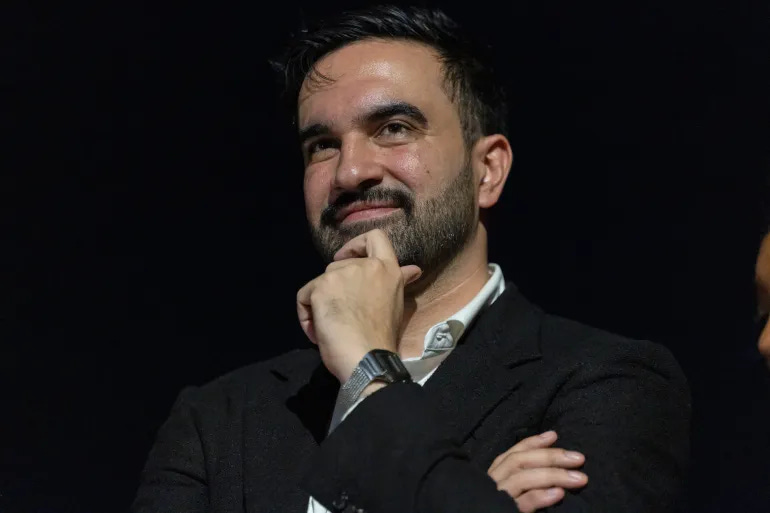
It was a night to forget for Zohran Mamdani.
The young Mayor, on the evening he was ceremonially crowned the city’s top political power broker, watched helplessly as his candidate of choice, Lindsey Boylan, suffered a convincing defeat in a Special Election for a City Council seat on Manhattan’s West Side. To add insult to injury, Carl Wilson, the declared victor and Chief of Staff to the former incumbent, was supported heavily by Speaker Julie Menin, Mamdani’s soft opponent in The Permanent Campaign of governance.
The headlines were merciless.
“Zohran’s political brand took a drubbing,” wrote POLITICO.
“Mamdani Loses a Fight He Shouldn’t Have Joined,” headlined Ross Barkan’s column.
“Imagine Antonio Reynoso and Dan Goldman are feeling pretty good right about now,” quipped David Freedlander, referring to candidates Mamdani had endorsed against.
The knives even came out for Morris Katz, the Mayor’s trusted and youthful advisor. Even Katz, who normally courts favorable coverage, could not escape the fallout.
The race was seen as a rare opportunity to expand Mamdani’s foothold of allies on the City Council, a persistent issue for the Mayor in his jockeying with the Speaker. Had Boylan won both the Special Election and the Democratic Primary, she would have been eligible to serve two additional terms starting in 2029 (tantamount to twelve years), an invaluable loophole. Furthermore, she pledged to vote against the educational facility buffer zone bill vetoed by the Mayor; whereas Wilson stated he would be one of the four votes needed by the Speaker to overturn Mamdani’s veto.
Mamdani’s endorsement of Boylan — a former senior official in the Cuomo administration who was one of the eleven women to accuse the former Governor of sexual harassment (which led to his resignation) — has been routinely framed as a loyalty-driven decision to support a key surrogate. Boylan was intensely outspoken about the perils of Cuomo’s prospective return to office last year, particularly when the former Governor’s victory appeared assured, which eventually led her to support Mamdani, who dramatically toppled New York’s last political dynasty. Soon thereafter, Boylan even joined NYC-DSA, which Mamdani credits as his “political home.”
According to City and State, Boylan’s campaign “suggested the endorsement was a thank you for that effort.” However, Mamdani’s support for Boylan was not a loyalty play, but emanated from the genuine belief that she could win. So what went wrong?
The lessons of Boylan’s loss are plentiful, and Mamdani would be wise to take them to heart. From the beginning, Boylan’s odds were long: she had already run for office twice beforehand (Congress in 2020, Manhattan Borough President in 2021), and struggled to coalesce support in her City Council District (earning only 22% in 2020, and an even more meager 12.5% in 2021); close to half a million dollars in outside spending flooded the race on her opponent’s behalf, with no comparable counter, either attentional or financial, to mitigate the deluge; while polling conducted weeks prior to the election showed her trailing by a prohibitive margin. Most importantly, Boylan lacked, in the words of Fiorello La Guardia, a “personal organization,” a small army of volunteers and surrogates in the district itself, an essential ingredient to engineer an upset. Most of her backers, particularly the marquee names (Mayor Mamdani, Brad Lander, The Working Families Party), counted their most loyal supporters beyond Manhattan’s West Side. This dynamic gave the campaign between Boylan and Wilson the air of a Congressional race where national progressives get their hopes up and coalesce late behind a promising challenger for an open seat, only to lose to the little-known Local Guy™ with scores of support in the district itself.
While Mamdani earned a plurality of the vote in Hell’s Kitchen and Chelsea last summer, an impressive result in a vacuum, he nonetheless underperformed his citywide average there; in fact, Mamdani’s vote share in the first round of the Democratic Primary (40.3%) in CD-3 ranked 28th out of the city’s 51 Council Districts. Nor did NYC-DSA, the volunteer engine that helped power Mamdani to City Hall, endorse Boylan. The 3rd Council District, while relatively young and renter-majority, has a more affluent, liberal, and cosmopolitan bent than other, more socialist-friendly neighborhoods in the Outer Boroughs. Whereas Wilson, uniformly supported by the neighborhood’s local elected officials and Democratic clubs, neatly fit into the seat’s time-tested lineage of openly gay Council Members. Undoubtedly, the history of the district (which includes the Stonewall Inn), created in 1991 to empower the West Side gay community, loomed large over the race. While it is impossible to determine what percentage of the electorate was gay (five, ten, or fifteen percent), it was undeniable that this demographic (particularly men) broke overwhelmingly for Wilson. Hell’s Kitchen, the most reliably progressive and renter-dense part of the 3rd Council District — and a Mamdani stronghold in the Democratic Primary — was nonetheless won by Wilson, partially due to the gay vote. The campaign for CD-3 was another chapter in the perpetual story of Relationships, Institutions, and Why All Politics is Local. Indeed, popularity does not always correspond to power.
Before becoming a State Assemblyman (let alone the Mayor of New York City), Mamdani had waged fights as a campaign operative just like this — on behalf of aspiring insurgents battling their local neighborhood establishment, to no avail.
His historic victory last June, a high-profile and polarizing war waged across all five boroughs, transcended this paradigm — but it did not erase it.
Now, many will urge the Mayor to retreat from his aggressive political program and preserve his political capital, weary of another public defeat. His foes, crowing as the boy wonder was knocked down a peg, will relish the chance to sideline Mamdani.
The case for hoarding political capital is not an unserious one. Proponents of caution would argue the young Mayor has his hands full governing the city, with scant time for proxy battles. In their telling, Mamdani, who barely earned a majority of the vote in last November’s General Election, should be working to add to his coalition, rather than fighting a multi-front war against different pieces of the political establishment. Some fear another high-profile loss could further electorally embolden his opponents.
And yet, Mamdani, a driven personality to say the least, must remain undeterred.
Bernie Sanders, his political hero, serves as an instructive example of a sitting elected official who consistently stumps for progressive, anti-establishment candidates (including Mamdani), often against the wishes of his Congressional colleagues. Granted, the Senator from Vermont is not an executive like Mamdani, who has to keep the peace with the Governor, the State Legislature, and the City Council.
But Mamdani’s endorsements matter far more than the average politician, and not just because he’s the sitting Mayor. Mamdani derives a lion’s share of his power from the voters themselves — rather than wealthy donors, labor unions, and the media class. Despite his winning smile and charming demeanor, Mamdani is feared by his opponents because, at a moment’s notice, he can marshal an army of dedicated volunteers capable of threatening their source of power — at the ballot box.
Thus, when Mamdani backs a candidate — and leverages his time to film videos, headline fundraisers, and make public appearances — who then loses by a comfortable margin, his enemies have less of a reason to fear him. Still, the silver lining of Boylan’s defeat was that it nonetheless showed Mamdani was willing to fight.
Does the broader New York City electorate care (or even notice) which candidates (or not) the Mayor supports for lower offices? Of course not. But the media, whose tone has shifted from marvel at the charismatic insurgent to skepticism of his governing philosophy, does. And, at least until the 2029 campaign, chatter like theirs will play an outsize role in The Narrative War between Mamdani and his adversaries. Boylan’s loss represented a small window into what will come if Mamdani’s other endorsees flop in June. Mamdani would be painted as talented, but not transformative; a mortal man, not a movement. The best way to mute said discourse, let alone turn it around into a display of electoral strength, will be to deliver a resounding sweep in seven weeks.
The Mayor has already pushed his chips in for Claire Valdez, a fellow democratic socialist running for New York’s 7th Congressional District, which spans many of the city’s youngest and most renter-dense neighborhoods in Western Queens and North Brooklyn, against Brooklyn Borough President Antonio Reynoso; and Brad Lander, challenging vulnerable incumbent Dan Goldman in New York’s 10th Congressional District, which includes Brownstone Brooklyn and Lower Manhattan. Currently, both candidates are on course to emerge victorious; internal polling has Lander leading comfortably, while Valdez — backed by NYC-DSA, UAW, and Bernie Sanders — is firmly the favorite to win over the nation’s most left-leaning electorate. And yet, Mamdani, a former three-term state legislator, knows that, while extra allies in New York’s Congressional delegation will help (particularly when Gregory Meeks and Hakeem Jeffries are hostile to the Mayor), the real power lies in Albany, where the Mayor is currently waging a still-unresolved battle to Tax The Rich.
While Mamdani has not made any state legislative endorsements yet, expect that to change soon with the completion of the state budget. But which candidates thread the needle of viability and political alignment? And what risk, if any, is the Mayor willing to assume in supporting those whose paths to victory are most challenging?
Let’s start with the lowest hanging fruit. Fellow socialists Samantha Kattan, running to succeed Claire Valdez, and David Orkin, pitted against Jenifer Rajkumar (and her red dress), are strong candidates who should win comfortably; both are running in Ridgewood, the city’s most left-leaning neighborhood, and overlap with NY-7, further juicing voter turnout. The Mamdani brand is robust in each district as well; the Mayor’s vote shares in the 37th and 38th Assembly Districts (~64.1% each) were his 5th and 6th highest, respectively, of New York City’s 62 Assembly Districts.
But these are easy wins. And Mamdani should not shy away from harder races.
A record number of open seats, lacking an incumbent running for re-election, give the Mayor another opening to reshape the legislature. Illapa Sairitupac is poised to perform well versus a relatively weak field in a progressive-sympathetic district on the Lower East Side of Manhattan. Aber Kawas, a Palestinian organizer who pivoted her campaign to the recently-vacated 12th State Senate District, which stretches from Astoria to Woodside to Ridgewood, is in a closer-than-anticipated primary with Assemblyman Steven Raga. Given Mamdani knows Sairitupac well from their days sharing a socialist slate, and, reportedly, made an effort to coax Kawas to run in the first place, I would expect him to support both candidates: each favored to win, running in open races, and tethered to his self-proclaimed “political home,” NYC-DSA. And with a helpful boost from the Mayor (plus competitive Congressional races at the top-of-the-ticket increasing turnout), both are more likely than not to win.
Nonetheless, as the de-facto leader of The Left™ in New York City, Mamdani should not stop there, nor should he weigh in on exclusively NYC-DSA races.
Jessica Gonzalez-Rojas, challenging fledgling incumbent Jessica Ramos in the 13th State Senate District (covering Jackson Heights, East Elmhurst and Corona), is on course to win comfortably, too. Gonzalez-Rojas is well-funded and endorsed by Rep. Alexandria Ocasio-Cortez; whereas Ramos, the chair of the Labor committee, is cash-strapped (in debt from her failed mayoral campaign), and hemorrhaging support from unions, once her base of support. Ramos alienated progressives by backing Cuomo over Mamdani, and now the Mayor could help end her political career. Shamsul Haque, the co-founder of the Bangladeshi American Police Association, appears to be another strong fit for the Mayor’s endorsement. Now running in an open Assembly seat in Woodside and Elmhurst, Haque helped convince other Muslim NYPD officers to vote for Mamdani, and later served on his community safety transition committee.
But not all contests will be that easy. The 69th Assembly District, home to the Mayor’s parents, spanning Morningside Heights and Manhattan’s Upper West Side, has become the next front in the proxy war between progressives, rallying behind public defender Eli Northrup, and institutionalists, backing rabbi Stephanie Ruskay. Northrup, who contested the seat two years prior (coming within eighteen points of Micah Lasher, now running for Congress), has been an ally of the Mayor prior to his victory last year (hosting conversations, leading canvasses); whereas Ruskay left Mamdani off her primary ballot entirely. Westside Progress PAC, the conglomerate of corporate and Cuomo donors that poured half-a-million dollars into sinking Boylan, is poised to back Ruskay aggressively. Furthermore, Solidarity PAC, which “resembles a New York state-level version of the American Israel Public Affairs Committee” and spent heavily on the 2024 primaries, has also raised money on Ruskay’s behalf.
The Mamdani vs. Cuomo race never ended, its contours merely shifted.
Still, not every race is a good fit for the Mayor’s precious political capital. New York’s 12th Congressional District — a clown car campaign at the heart of Manhattan, featuring liberals and technocrats, pitting West Siders versus East Siders, testing the salience of Artificial Intelligence against the everyday chaos of Donald Trump — is a poor fit for Mamdani’s endorsement, with few discernible ideological fault lines. The fact no leading candidate even mentioned the illegal land sales at Park East synagogue is perhaps the best example of why NY-12 is a poor fit for Mamdani. Peter Sterne recently floated that he could “see [Mamdani] endorsing Yuh-Line Niou.” But endorsing Niou, who currently trails Grace Lee for Lower Manhattan’s State Senate seat, feels like ignoring the lessons of Boylan’s loss: the pitfalls of backing a non-DSA candidate, against an opponent (let alone an incumbent) with the lion’s share of local support, in a district where Mamdani performed well, but did not rank among his best. Jibreel Jalloh, a former Obama scholar, has momentum against Jaime Williams, a DINO (Democrat In Name Only) who represents Canarsie, Flatlands, and Mill Basin. The incumbent is best known for (mistakenly) being called a “Republican” by Rep. Alexandria Ocasio-Cortez during her testimony before the House of Representatives, where Williams argued vociferously against migrant shelters (she endorsed Republican nominee Curtis Sliwa for mayor last year). While the Mayor may be inclined to back Jalloh, an undoubted upgrade over the NIMBY and conservative Williams, this was Mamdani’s single worst Assembly District. Indeed, the most important part of wielding power is having a clear-eyed understanding of its limits.
However, the greatest political challenge lies with backing challengers to incumbents, which risks the ire of State Assembly Speaker Carl Heastie.
With Eon Huntley in Bedford-Stuyvesant and Christian Celeste Tate in Bushwick, gentrifying hotbeds of democratic socialism, Mamdani has the opportunity to notch two more wins against opponents of his agenda. Tate, pitted against longtime incumbent Erik Dilan, the last vestige of local machine whose base resides in Cypress Hills, stands to benefit from the aforementioned NY-7 contest, which will help bring younger voters to the polls; whereas Huntley rematches a weak ally of Hakeem Jeffries, Stefani Zinerman, in a neighborhood Mamdani won by 51 points in the Primary, his third best performance in the entire city.
Were Mamdani to target only a handful of incumbents, few are as vulnerable as Zinerman and Dilan, whose days have been numbered for several cycles.
Yet, of the contests mentioned thus far, a disproportionate number (save for Lander, Northrup, Gonzalez-Rojas, Haque) come from a handful of communities whose reputation for left-leaning politics is well-established. Already, you can see a narrative percolating amongst the media that, beyond the confines of The Commie Corridor, Mamdani is not actually *that* powerful. A crucial component of building a political program is demonstrating the breadth of, not only your appeal, but your movement’s.
So what if Mamdani can help create The Next Commie Corridor?
Last June, Mamdani’s greatest overperformance came not in the hipster precincts of Brooklyn or Queens, but the supermajority renter, working-class blocks of Upper Manhattan. In New York’s 13th Congressional District, which stretches from Morningside Heights to Marble Hill and has been represented by Rep. Adriano Espaillat for the past decade, Mamdani blitzed Cuomo by 19 points; in the 70th Assembly District, spanning most of Harlem, represented by native son Jordan Wright, Mamdani won by an even greater 23 point margin. Now, NYC-DSA (and Justice Democrats) have fielded challengers — student organizer Darializa Avila Chevalier and public defender Conrad Blackburn — for both seats, hoping to realize the electoral gains foreshadowed by Mamdani the year prior. In prosecuting both campaigns, The Left is taking on two of the local fiefdoms that have long dominated politics north of 110th Street: Espaillat has been both the standard bearer and trailblazer of Dominican political power, whereas Wright comes from a storied lineage of African American politicians in Harlem (his father, Keith LT Wright, represented the seat for 24 years, and now chairs the Manhattan Democratic Party; his grandfather, “Turn ‘Em Loose” Bruce Wright, was a legendary judge who served on the New York State Supreme Court). Both Espaillat and Wright supported Cuomo in the Democratic Primary before defecting to Mamdani ahead of the General Election.
The polling for Espaillat, long considered a power broker by the political class, is particularly alarming. AIPAC, the incumbent’s top donor, has grown adept at disguising their spending (through eleventh hour shell PACs with misleading names), and will surely deluge the district in the campaign’s final weeks, as they did in Illinois. Handicapping Wright’s race is more difficult: on one hand, the incumbent failed to crack fifty percent versus a weak field two years ago; on the other, a Super PAC (formed by Cuomo-ally Charlie King), intends to spend half-a-million dollars bludgeoning Blackburn for his two-month unpaid internship in the Florida Attorney General’s office (led by Pam Bondi) while he was in college.
While the Age and Renter profiles of NY-13 and AD-70 are comparable, the Democratic electorate in NY-13 is more racially diverse (~31% White, ~27% Black, ~34% Hispanic), diluting Espaillat’s advantage with Hispanic voters; whereas the AD-70 electorate is plurality Black (~47%), consistently The Left’s weakest demographic.
If the electorate this year is comparable to last year, NYC-DSA can not only win these races, but sweep everywhere. This phenomenon hinges on whether the “Mamdani Voters,” disproportionately young and previously disaffected, who flocked to the polls for a high-stakes mayoral race, return for less-salient downballot contests. In places like Upper Manhattan, as high as one-quarter of the electorate had never voted in a primary before. These are the people Mamdani has a unique ability to reach.
But these are brutal contests, with well-connected opponents who can create headaches for the young Mayor, should they so choose. Mamdani’s support for the campaigns mentioned earlier, in the author’s estimation, is relatively cut-and-dry.
I suspect that, if the Mayor awakes in a cold sweat at Gracie Mansion, with political matters wracking his brain, these two Upper Manhattan races are top of mind.
Can Mamdani, on good terms with Harlem’s machine and disincentivized to move against the Chair of the Congressional Hispanic Caucus, stomach the backlash?
He could just stop there. He doesn’t need to. His supporters would understand.
“Even when you have a very powerful political figure like the mayor, it’s really an organized base that can be a multiplier effect, and it’s in coordination between the movement and the individual, powerful elected that we can really maximize campaign power,” Gustavo Gordillo, co-chair of NYC-DSA, told NY1 in a recent interview.
Very true. But NYC-DSA also needs Mayor Mamdani — at least as much as he needs them, if not more so. Right now, NYC-DSA is spread thin across several boroughs and neighborhoods, running close to a dozen campaigns, each with a unique set of circumstances and challenges. The overarching message and thematic agenda — taken for granted last year under a citywide campaign that inspired masses of people — is far less focused this cycle. Supporting Mamdani, for better or worse, is the unspoken thread that unifies NYC-DSA’s campaigns. But only the Mayor can bring that together. Political capital, absent a strong movement, is hollow.
I spent a lot of time with Zohran Mamdani during the spring and summer of 2024.
This was the nadir of the socialist left since 2016. Joe Biden, hemorrhaging approval by the day, was still on the ticket, his administration complicit in the genocide of Gaza. Democratic voter turnout, compared to when Trump was President, was atrocious. Morale among the rank-and-file was even lower. NYC-DSA, after running ambitious slates in prior years, fielded only three candidates (which pales in comparison to the ten candidates running today). Only one, Claire Valdez, ultimately won.
Mamdani, unburdened after knocking his opponent off the ballot, spent these crucial months lending assistance to the insurgent candidates: headlining fundraisers, identifying South Asian and Muslim voters, advising on where to get the most petition signatures, and coaching each candidate through the many difficult moments that inevitably come with running for office. As a campaign manager myself, I had a front row seat to his lonely, but purposeful crusade. Of course Mamdani, even then, had grand ambitions to run for Mayor. Yet these were not the machinations of an opportunist, but someone who genuinely cared, even at the movement’s lowest point.
Mamdani, too, was once the insurgent candidate left to fend for himself, spurned by The Left’s most powerful institutions. When he ran for State Assembly in 2020 against Astoria’s inoffensive incumbent, Aravella Simotas, Mamdani had few endorsements, save for NYC-DSA and the Muslim Democratic Club. Without a doubt, iron sharpens iron, and the difficulty of Mamdani’s first campaign shaped his worldview and made him a better politician and leader. Still, were it not for 423 voters who bubbled in the little-known circle on their ballots, history would have changed — dramatically.
The electoral winds, both nationally and locally, have shifted significantly since then. Miraculously, momentum is squarely behind left-leaning insurgency, and Mamdani is a huge reason why. The social and political forces have lined up, producing a moment ripe for electoral overhaul. But these moments, evidenced by how incredible triumphs in 2018 and 2020 gave way to grave disappointments in 2022 and 2024, are fleeting.
The Mayor, as well as anyone, knows this. You may only get one shot at victory, and by the time you realize it, the chance has already passed by.
Mamdani may not be on the ballot, but his Movement is.
Connect With Me:
Follow me on Twitter @MichaelLangeNYC
Email me at Michael.James.Lange@gmail.com
Great stuff. Really valuable run down as always.
Great work as always. I agree with just about everything, particularly about Eli in AD-69. He is a great candidate, and I’m disturbed about the pacs spending against him. One small semi correction about NY 12, the hot mess of a primary that is probably going to force me to move to Brooklyn: Last night after the forum at SWFS, Jack Schlossberg said that he he condemns “the protest and it's violent or antisemitic rhetoric,” but adds, “I don't think that a land sale for real estate that is in violation of international law should be happening in the house of worship.” https://x.com/jacobkornbluh/status/2052202794006753529?s=46